
The Odyssey (2026) – Christopher Nolan: Story, Summary, Themes & What the Movie Means
There are some films you watch for spectacle, and there are others that stay in your head long after the credits. Christopher Nolan’s The Odyssey aims to do both. It takes one of the oldest surviving epic stories and turns it into a large-scale cinematic journey filled with war, monsters, deception, family, guilt, and the difficult road home.
Based on Homer’s ancient epic, The Odyssey follows Odysseus after the Trojan War as he attempts to return to Ithaca and reunite with Penelope and his son Telemachus. Universal describes the movie as a mythic action epic and highlights Nolan’s use of IMAX filmmaking to bring the story to the screen on an unusually large scale.
For Android users researching entertainment applications, Castle APK may also appear in discussions about mobile viewing and app availability. Readers interested in older app releases can also explore Castle App Download Old Versions as a general Android-version resource. Any movie or series should, however, be viewed through a legitimate source that has the necessary distribution rights.
The Odyssey 2026 Movie Summary
At the center of the movie is Odysseus, the legendary king of Ithaca. After the Trojan War, he begins the long journey back home, but returning proves far more difficult than winning a battle.
Odysseus and his men encounter danger after danger on their voyage. The story draws from some of the best-known episodes of Homer’s epic, including encounters with mythical creatures and supernatural forces. The modern adaptation keeps the essential idea of a warrior who has survived a terrible conflict but still has an even greater challenge ahead: finding his way home.
His journey is not only physical. It is also psychological.
Odysseus has to deal with the consequences of decisions made during the war. The movie presents him not simply as a victorious military hero, but as a man carrying memories, responsibility, and guilt. That emphasis fits a recurring feature of Nolan’s storytelling, in which extraordinary achievements can leave characters facing enormous personal consequences.
At home, Penelope and Telemachus represent what Odysseus has been separated from for years: family, stability, and belonging. Their part of the story gives the journey an emotional purpose. Odysseus is not merely trying to survive; he is trying to return to the people and place that define him.
What Makes Nolan’s The Odyssey Different?
Homer’s story is already filled with adventure, but Nolan gives the material a more modern philosophical edge.
One of the most interesting elements is the idea that a civilization can destroy itself not only through external enemies, but through its own decisions. The movie repeatedly asks questions about power, violence, trust, and morality.
That is where the idea of Zeus’ Law becomes especially important. Recent explanations of the film identify it with the ancient principle of hospitality and respectful treatment of strangers. The movie uses that idea to examine what happens when societies abandon their own moral standards.
The implication is powerful: civilization is not simply buildings, armies, wealth, or territory. It is also the values that hold a society together.
The Trojan War and Its Consequences
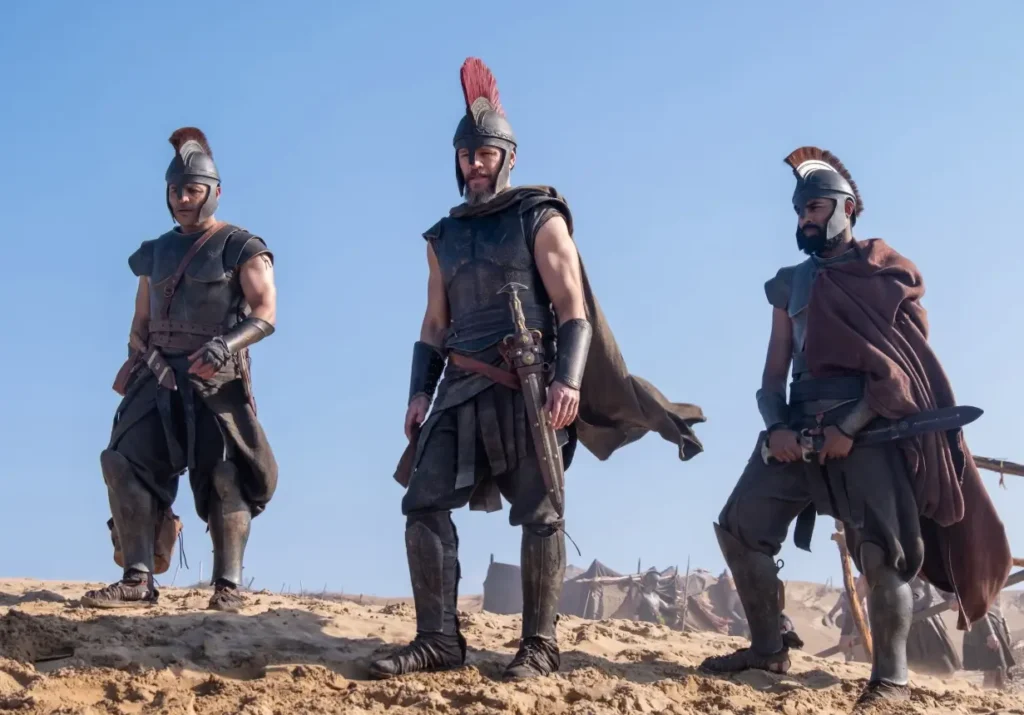
The Trojan War is more than the backstory to Odysseus’ journey. It is the event that shapes everything that follows.
Nolan’s version places significant attention on the consequences of the Greeks’ actions at Troy. The Trojan Horse, traditionally remembered as a brilliant act of deception, can also be interpreted as a violation of trust and moral boundaries.
That makes the victory at Troy feel complicated. Winning a war does not necessarily mean escaping its consequences.
Odysseus returns from Troy carrying the weight of what happened there, which gives the story a darker emotional dimension.
The Sea People Explained
Another notable idea in the film is the mysterious Sea People. They are presented as a frightening force associated with destruction and instability.
But the movie’s deeper interpretation turns that concept around.
Rather than simply asking who the enemy is, The Odyssey asks whether the supposed enemies of civilization are actually different from the civilized people themselves.
This theme becomes especially striking when characters confront the destruction left behind by warriors who identify themselves as Greeks. The contrast between identity and behavior becomes part of Nolan’s larger argument about moral blindness.
The Sea People therefore work on two levels: as an apparent external threat and as a symbolic reflection of what civilization can become when it loses its principles.
Odysseus, Trauma, and Guilt
One of the film’s most fascinating elements is Odysseus’ psychological state.
Instead of portraying him as someone who simply celebrates victory, Nolan presents him as a man haunted by the past. This has led viewers to compare aspects of Odysseus with Nolan’s earlier exploration of guilt and responsibility in Oppenheimer.
The connection is not that the stories are identical. Rather, both examine what happens when a highly capable person helps create something with devastating consequences.
Odysseus may be a hero, but the movie asks whether heroism excuses everything a hero does.
That question gives the character greater complexity and makes the journey home feel like a search for moral as well as physical restoration.
Penelope and Telemachus
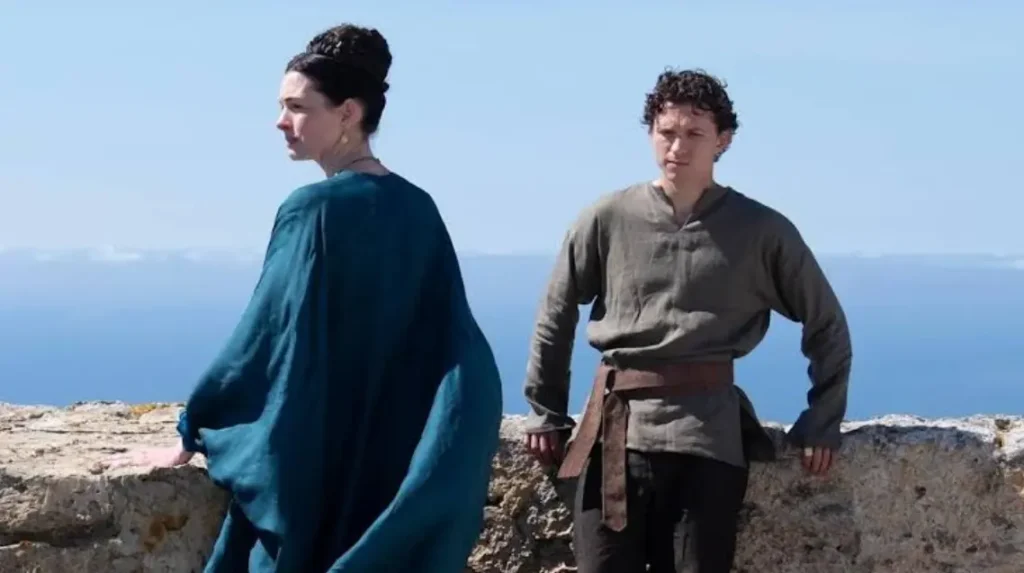
Penelope is crucial to the emotional structure of the film because she represents patience, loyalty, and the life waiting for Odysseus beyond the battlefield.
Telemachus, meanwhile, represents the next generation.
That relationship matters because the movie repeatedly returns to the question of what one generation leaves behind for another. A civilization can inherit wealth and power, but it can also inherit unresolved conflicts, violence, and broken values.
The younger generation therefore becomes part of the movie’s larger warning about memory and responsibility.
Antinous and the Abuse of Power
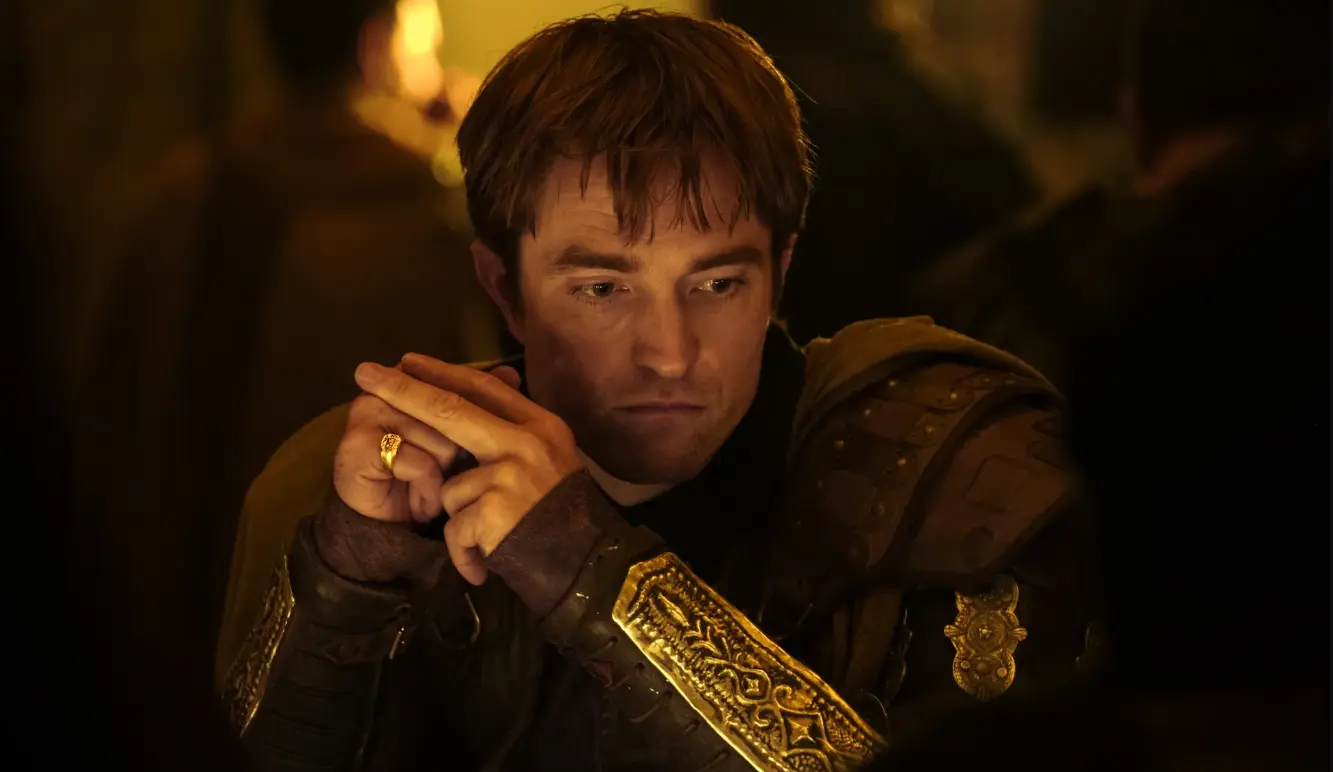
Another interesting character is Antinous, played by Robert Pattinson. Current cast listings identify Pattinson as Antinous, Matt Damon as Odysseus, Anne Hathaway as Penelope, and Tom Holland as Telemachus.
Antinous can be viewed as an example of entitlement without responsibility. His behavior helps reinforce one of the film’s central ideas: societies become unstable when status, privilege, and power are separated from empathy.
This makes the story feel surprisingly contemporary even though its foundations are thousands of years old.
The Ending and the Movie’s Bigger Message
The ending can be interpreted as more than a simple homecoming.
Odysseus has survived monsters, battles, loss, deception, and years of separation. But survival alone does not resolve everything.
The film’s larger message is about remembering the consequences of past actions.
A civilization can become powerful and still become morally fragile. It can celebrate old victories while forgetting the damage that produced them.
That is why the story’s ancient setting feels relevant to modern audiences. The movie asks viewers to consider whether history teaches people anything—or whether each generation eventually repeats the same mistakes.
What Viewers Are Discussing
Audience discussions around The Odyssey have been particularly interested in its themes.
Some viewers praise the film’s philosophical ambition and its interpretation of war, guilt, and civilization. Others are more critical of the pacing, character development, or the depth with which certain themes are explored.
There is also disagreement over whether the movie should be described as anti-war, anti-Western, or simply a warning about moral decline. That disagreement is useful because it shows that Nolan’s adaptation is designed to encourage interpretation rather than provide one simple answer.
For some viewers, the central lesson is that war creates trauma that does not disappear when the fighting stops. For others, the bigger idea is that societies collapse when they stop respecting basic moral obligations toward other people.
Both readings help explain why the movie has generated so much discussion.
Final Thoughts
Christopher Nolan’s The Odyssey (2026) takes an ancient journey and gives it a modern psychological and philosophical dimension. It remains an adventure about Odysseus returning home, but underneath the monsters and battles is a deeper story about power, guilt, trust, family, and the survival of civilization.
With Matt Damon leading a large ensemble cast and Nolan using large-format IMAX filmmaking, the movie is designed as a major theatrical experience as well as a story meant to provoke discussion.
For readers interested in Android entertainment applications, Castle APK can be discussed separately as an app-related topic, while Castle App Download Old Versions can be used as an informational resource for users looking into previous Android releases. Movie viewers should use authorized platforms and licensed sources for watching copyrighted films and series.